Mobile Radiator Repairs in Essex
Coolant on the driveway or a level that keeps dropping can mean a leaking radiator or hose. We find the source at your home or work across Essex and East London, then repair or replace it.
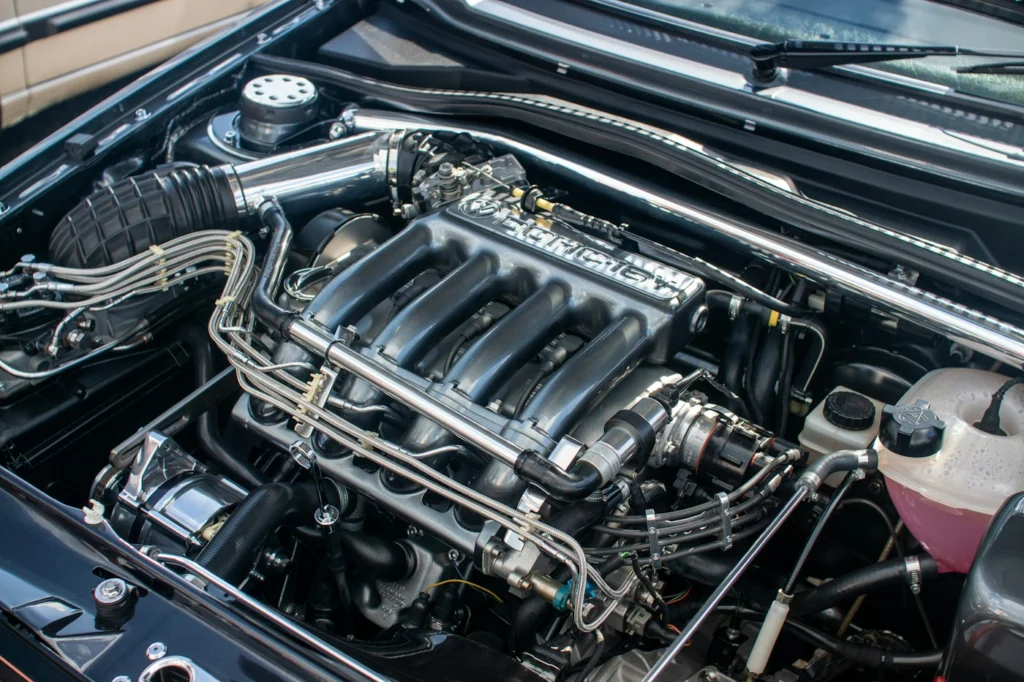
What the radiator does and how it fails
Hot coolant from the engine passes through thin tubes in the radiator, and air flowing through the fins takes the heat away. An electric fan pulls air through when the car is standing still, which is why cooling faults often show up first in traffic.
Most modern radiators have an aluminium core with plastic tanks crimped on either side. Stone chips damage the fins, corrosion eats the tubes, and the plastic tanks can crack with age. Internal sludge can also block the core, usually when the wrong coolant has been mixed or the system has been neglected.
We should be straight about the name of this service: a failed modern radiator is normally replaced rather than patched, as a repair rarely lasts. Often the fault isn’t the radiator at all, but a perished hose, a loose clip or a pressure cap that no longer holds. That is why we pressure test and find the source first.
Why call us for a coolant leak
Source found first
Pressure testing shows whether it is the radiator, a hose, a clip or the cap.
Right coolant refilled
Mixed coolant types can form sludge, so we use what your car specifies.
Honest about repair or replace
If a repair won’t last, we tell you, rather than sealing up a problem.
How we deal with a radiator problem
- 01
Pressure test
With the engine cold, we pressurise the system and watch for drips from the core, tanks, hoses, clips and cap.
- 02
Check the fan
We confirm the cooling fan cuts in and that airflow through the fins isn’t blocked by debris.
- 03
Repair or replace
Hoses and clips are renewed, or the radiator is removed, with the bumper or front panel moved aside if needed.
- 04
Refill and bleed
We refill with the correct coolant mix, bleed trapped air, run up to temperature and recheck for leaks.
When to contact a mechanic
Contact us if the expansion tank needs topping up more than once in a while, or you find fresh coolant under the car. Coolant doesn’t get used up in normal running, so a falling level means it is going somewhere.
Look under the bonnet with the engine cold and note where the wet patch is. If the gauge starts climbing in traffic, stop when it is safe. Contact us and we will talk you through what to check.
Never open a radiator or expansion tank cap on a hot engine; let it cool naturally first, because escaping coolant and steam can cause severe burns.
Radiator work without moving the car
A car losing coolant shouldn’t really be driven to a repair, so fixing it on the drive is the safer option. Hoses, clips and many radiators are reached from the front of the car, which works well in East Ham, Billericay and elsewhere in Essex and East London. Some cars need the bumper off, so we need enough room in front and a level space. All work is subject to the suitability of the job and location.
Common questions
Can my radiator be repaired, or does it need replacing?
Usually it needs replacing. Modern radiators have thin aluminium tubes and plastic tanks that don’t take a lasting repair well. If the leak is actually a hose, clip or cap, that is a smaller fix. We pressure test first, then tell you which it is and quote for it.
Is radiator sealant from a bottle a good fix?
Treat it as a get-you-home measure at most. Sealant can block small passages in the radiator and heater matrix, so one leak can turn into a cooling problem elsewhere. If you have already added some, let us know. A proper repair is the better way forward.
Can I top up the radiator with water?
In an emergency, yes, once the engine has fully cooled. The Highway Code says to let an overheated engine cool before removing the filler cap, then add water or coolant. Plain water dilutes the antifreeze, though, so have the mix corrected, and the leak found, soon afterwards.
Need a Mobile Mechanic? Let’s Get Your Car Sorted.
Tell us what’s happening with your vehicle and get in touch to discuss your repair or servicing requirements.